Showing posts with label curry. Show all posts

Thursday, February 27, 2014

Chena Moru Kootan / Yam in a curd and coconut curry from Kerala

I am continuing to dip into my mother's recipe trove, meaning I am still at my parents' place and enjoying mom's cooking. My pace of posting recipes is just not keeping pace with mom's cooking so, though late I am happy to post a traditional Keralite curry today. I bring a yogurt and ground coconut base curry called the moru kootan, literally translated to curds curry. This moru kootan is made with vegetables like ash gourd / white pumpkin or raw Kerala plantain or just ripe Kerala plantain or yam / elephants foot. Each of these vegetables adds a different flavor to this curry and most times each of us have favorites. I love moru kootan or like we call at home moru ozhicha kootan with just ripe Kerala plantain - this curry is sweet and sour at the same time. And my most disliked combination is when ash gourd is used in this curry because the water content of the gourd makes the curry watery and seems to dilute tastes.
 
I do not make this curry at home because my husband stays miles away from it because of his yogurt / curd allergy. And demand mom to make it with the plantain when here.
I would of course suggest try making this curry with the just ripe Kerala plantain. This plantain is normally available in any of the Tamil / Mallu shops that is found in most cities in India. If you are in the US, then try checking for this in either a Mexican or a West Indian store, surprising both these regions use this plantain extensively. And try selecting just ripe plantain for this curry never fully ripened ones.

Ingredients
Yam / Elephants foot / Chena - 250 gms
Coconut, grated - 1/2 a coconut
Cumin seeds / Jeera - 1 tsp
Green chilli - 1, slit add whole
Curds, plain unflavored - 2 cup, thick beaten
Turmeric pwd - 1/2 tsp
Red chilli pwd - 1 tsp
Mustard seeds - 1/2 tsp
Fenugreek / Methi seeds - 1/2 tsp
Dry red chilli - 2 to 3
Curry leaves
Sugar - 1 tsp
Oil - 2 tsp
Salt to taste
When handling chena / yam, oil your hands and then clean it and cut into1 inch square pieces. Else use a pair of gloves to avoid the itchiness some yams have. Slit the green chillies. Beat the yogurt  curds and keep aside.
Add the grated coconut and jeera into a blender jar and grind to a very fine paste.

Into a saucepan or pot add the chenna / elephants foot pieces, little salt, turmeric powder, red chilli powder, slit green chilli. Add water just enough to cover the contents in the pot and cover and cook till the yam is cooked. Not over done and soft but just cooked. Add the ground coconut paste to cooked chenna and mix carefully. Add water if required to get a thick consistency, the curry should be thick but pourable. Give it just one boil and then lower the heat to low. Add the beaten curds and sugar and mix.  Check the taste for salt and add some if necessary. Continue to cook but take the pan off the heat when the bubbles start forming. Do not let it boil.
 
Heat a pan for the tempering and add the oil and when it is hot add the mustard seeds and fenugreek seeds. When the mustard seeds splutter add the dry red chilli pieces and when it darkens add the curry leaves and immediately take the pan off the heat. Add the tempering / tadka to the curry and keep closed with a lid till ready to serve.
 
Moru kootan is best enjoyed with rice and spicy fried fish / mezhukuperatty.
 
My mother's recipe for Chena Moru Kootan goes to
Walk through Memory Lane originally by Gayatri's Cookspot


Saturday, February 22, 2014

Ulli Thakkali Varatharacha Curry / Onion & Tomato in Roasted Coconut Gravy

Since coming to my mother's place, cooking has been on a low. Mom is completely in charge here, so I decided to feature some of her recipes which are mostly traditional Keralite recipes. And like most mothers, she also does not usually have exact measurements. But she caught on quick and suggested tips to add in the write-up especially for non-Mallu cooks. Today's recipe is one such curry recipe that you will see in Malayali households - Ulli Thakkali Varatharacha curry or translated - Onion and Tomato in a roasted-coconut-paste gravy. Typically in Kerala, coconut is either ground fresh or is roasted and then ground for the curry base. This one here - Ulli Thakkali Varatharacha curry has coconut and coriander seeds, roasted to a medium golden color and then ground for the curry. On to the rest of the recipe....

Ingredients
Onion / Ulli- 1.5 cup
Tomato / Thakkali - 1 cup
Coconut, grated - 1 cup
Coriander seeds - 2 tbsp or Coriander powder - 3 tbsp
Tamarind pulp - 2 tsp
Turmeric pwd - 1/2 tsp
Red chilli pwd - 1 tsp
Curry leaves - 2 sprigs
Mustard seeds - 1/2 tsp
Curry leaves - 1 to 2
Dry red chilli - 2
Oil - 1.5 tbsp
Salt as per taste
The measures given here for the onion and tomato is post cleaning and is sliced in case of onion and diced into pieces. Measure for both coriander seeds and powder is given in case one or the other is not available. Traditionally, coriander seeds is used.

Heat a shallow pan on low flame and add the the grated coconut. Keep stirring the coconut to evenly roast it till golden in color. Do not let it brown. Traditionally, the grated coconut was grated with a few drops of oil so it does not catch the bottom of the pan and burn. But today, with non-sticks and well tempered iron pans, you don't need to add oil. Add red chilli powder to the roasted coconut after taking the pan off the heat and stir altogether for a minute. If using coriander powder add it along with the red chilli powder to the roasted coconut and stir. Keep it in a bowl to cool.
If using the coriander seeds add it to the same pan and roast on low heat till the seeds change color and its aroma is released. Add it into the bowl with the coconut. Once cooled, grind it in a blender.
 
Heat a saucepan and add 1 tbsp oil and once it is hot add the onion and saute on medium heat till translucent. Then add the tomato and stir for a minute and add the tamarind paste, salt and turmeric powder. Follow it up with the ground paste and a cup of water and give it one boil. Check the salt and if more water is needed in the curry and adjust as needed. Add a few curry leaves in the curry and take it off the heat and keep covered. Heat a separate pan for tadka / tempering and add the 0.5 tbsp into it. Once hot add the mustard seeds and let it splutter then add broken red chilli pieces and the sprigs of curry leaves and stir it. Take it off the heat once the chillies change to a darker color and pour this whole mix into the curry and keep covered till ready to serve.

We have this Ulli Tomato Varatharacha curry with rice and a thoran or mezhuperatty.
My mother's recipe for Ulli Thakkali Varatharacha Curry goes to
Walk through Memory Lane originally by Gayatri's Cookspot


Monday, December 2, 2013

Aiyla / Bangda / Mackerel Currry - a Kerala Fish Curry

Picture a small cottage at the side of the fields overlooking swaying coconut trees and endless stretches of paddy fields. A gentle breeze blowing across, bringing with it strains of a barely discernable song and an aroma of something nice cooking away on a wood fire stove. Now what completes the picture for Keralites? Focus onto the pot bubbling away on the stove, it is a Fish or Meen Curry, and alongside is a pot of red unpolished rice. Take this a little further - at lunchtime, these pots and plates are kept on the floor and each person is handed a plate heaped with boiled red rice and a little fish / meen curry on the side. The traditional way to enjoy this meal is by pressing handfuls of rice in the insides of the palm into balls and dipping these rice balls in the fish curry and quickly popping it into the mouth. A satisfied sigh follows after it is swallowed. A heaped plate is thus demolished in a matter of minutes and a satiated burp follows.
Today, when my mother made the fish / meen curry in a typical Keralite way it was easy to imagine the above. The absence of the many props did not lessen our enjoyment of our fish and rice lunch.  We made the aiyla / bangda fish in a coconut and coriander gravy - a pacha thenga and mallee aracha curry in the chatty. Typically, my mother's measurements are described as a little of this and either a small or big spoon of that. This time, though, she did wait for me to measure the main ingredients out. So, here goes the recipe .....

Ingredients
Aiyla / Bangda /Mackerel fish - 6
Thenga / Nariyal / Coconut grated - 3/4th cup packed
Cheriya ulli / Sambhar onions / Shallots - 12
Mallee / Dhaniya / Coriander pwd - 6 tbsp
Green chilli - 4
Ginger - 1.5 inch pc
Garlic cloves - 5 to 6
Curry leaves - 15 to 20
Kodumpulli - 1 pc (the Kerala kokum)
Turmeric pwd - 1 tsp
Red chilli pwd - 4 tsp (mix of kashmiri & hot chilli powders)
Coconut oil - 1.5 tbsp
Salt as per taste
Clean the fish, cut it into pieces and apply salt and keep aside. Slit. The green chillies lengthwise and julienne the ginger. Wash the kodumpully and soak it in water. Incase kodumpully and shallots are not available substitute with 2 pieces kokum and 3/4th of medium sized onion.

Add the grated coconut, coriander powder, shallots, red chilli powder and garlic into a blender jar and grind to a fine paste.
Take the chatty (or any pan) and add the ground paste, slit green chillies, curry leaves, ginger juliennes, kodumpulli, turmeric powder and a bit of salt. Add about 2 to 2.5 cups of water to make a watery thin gravy and mix well. Add the fish and put the chatty on the stove on high heat. When the curry starts boiling, lower the heat and let it cook. It will take only about 10 to 15 minutes for the curry to be done. Hold the chatty with mittens and swirl it to mix the curry. Check the curry for salt and sourness. If the curry is too sour the kodumpully can be removed. This curry should have medium thick gravy which is hot and sour. If cooking in a chatty, the chatty retains heat and the curry continues to cook for some time even after taking it off the heat. The gravy thickens during this time so adding a bit of extra water at the start helps.

When done add the coconut oil and take off the heat. Keep covered for a few minutes and then take the lid off.
Serve hot with rice and a thoren.

Sunday, November 17, 2013

Motta Curry Thenga Paal / Egg Curry in Coconut Milk Gravy

This Motta curry is another version of an egg curry we make at home. Especially when we don't know what to make and are too lazy to check the contents of the refrigerator and decide. That's when my husband enters the kitchen to rustle up an Egg / Motta curry.
 
Ingredients
Eggs - 4
Onion - 1
Tomato - 2
Green chilli - 2
Ginger - 1 inch piece
Curry leaves - 7 to 8
Coconut milk - 1/2 cup
Turmeric pwd - 1/2 tsp
Red chilli pwd - 1 tbsp
Coriander pwd - 3 tsp
Coconut oil - 1 tsp (optional)
Salt as per taste
Oil - 3 tbsp
Slice the onion and chop the ginger, tomatoes and green chillies.

Separately beat the eggs with a pinch of salt till fluffy. Heat a pan and add the remaining oil and let it heat up. Once hot add half the beaten eggs and make an omelette. Once done, take it on to a plate. Make a second omelette with the rest of the beaten eggs. Cut into about 2 inch square pieces.
 
Heat a pan and add 2 tbsp oil and once it is hot add the sliced onions. Sauté till light golden then lower the heat and add the turmeric and red chilli powder and sauté well. Then add coriander powder and sauté well without burning it and then add 2 cups of water. To this add the chopped tomatoes and ginger and cover and give it a boil. Let the tomato soften and blend with all the ingredients. The gravy has to be a very water one at this stage. Add the omelette pieces to this and let simmer and absorb some of the gravy. After a few minutes add the coconut milk and some more curry leaves into the curry and mix well. Take it off the heat before it boils. You can pour a few drops of coconut oil over the curry and keep covered till ready to serve.
 
This Motta curry is best served with steaming hot rice and a thoran.

Saturday, November 16, 2013

Dal Tadka / Lentils with tempering

from my husband - The dal is a staple in the Indian diet and is made in various forms in various parts of the country. In its function, it is both nourishing and comforting. In character, it is democratic and nationally unifying. Its make-up varies in flavor from bland to severely spicy, in taste from tangy to sweet, in consistency from soup-like thin to gruel-like thick.
 
Here, we will take up a style of dal, supposedly the UP style. I say supposedly, because I am not absolutely sure in that I have never had this in UP, but my neighbors where I grew up, made it this way. They were from UP and their cuisine was unique - we were entreated to a whole new spread - Pulao, Chhole, Poori, Kachori, Sabzis, Curries, Dal, et al.
 
Use of ghee, hing, jeera, and not using onions and many more such specific methods seemed very different to us, more so, because our idea of anything north Indian was more Punjabi in nature with onion, tomato, garam masala, etc. Since they hailed from the UP heartland and were pure vegetarians, we took their cuisine to be representative of UP vegetarian from places like Aligarh, Moradabad, Bareilly, Mathura, Agra, Chandausi, and such, and distinctly not Mughlai or Awadhi.
Ingredients
Tuwar dal / split Pigeon peas - 1/2 cup
Tomato - 2
Coriander leaves - 5 to 6 sprigs
Turmeric pwd - 1/2 tsp
Red chilli pwd - 1 tbsp
for tempering
Ghee / Clarified butter - 1 tbsp
Jeera / Cumin seeds - 1/2 tsp
Hing / Asafoetida - 2 pinches
Wash and soak the dal for an hour. Drain the dal and add 1 cup of water and pressure cook for 3 whistles.
In a pot / saucepan add 1/2 cup water and put it on heat. Chop tomatoes and add it into the pot with salt, turmeric powder and red chilli powder. Cover with a lid and cook. Add the dal, coriander stalks and leaves and 1/2 cup water and cover and cook. Take off the heat when the dal and tomatoes have cooked and mixed together. Check for salt and add a little if required.

Heat a pan and add the ghee / clarified butter. When hot, add the jeera or cumin seeds and let them splutter and add hing or asafoetida and take off the heat. Pour this into the pot of dal and cover immediately with the lid. When ready to serve, mix the tadka / tempering into the dal and pour out into a bowl.
Lentil / dal is a very healthy food full of proteins and dietary fiber. This recipe for Dal Tadka uses tuwar dal which contains folic acid an essential vitamin for women especially during pregnancy.

Tuesday, November 12, 2013

Cheera Moloshyam / Mulakushyam

Pacha Cheera, as spinach is known in Malayalam, is quite widely used in Kerala in thoran and in moloshyam / mulakushyam. Moloshyam or mulakushyam is a curry made with coconut paste and dal and can be made with ash gourd and pumpkin, spinach or tender drumstick leaves or cabbage and the name is "whichever vegetable" moloshyam. Today, the recipe I give here is for a pacha cheera moloshyam which is spinach moloshyam. Since spinach like all leaf vegetables shrink on cooking, you have to have a large quantity if you intend making a sabzi with it. So, on days you don't have enough spinach for a sabzi make this curry which does not over cook the greens making it a very healthy dish.
This moloshyam is adapted from the Palakkad Iyer style of cooking. As such, in Kerala moloshyam is made but without using coconut. Instead, coconut oil is used at the end to season it. For today, this Cheera Moloshyam recipe has ground coconut in it.  
 
Ingredients
Spinach - 1.5 cups 
Tuwar / Moong dal - 1/4 cup
Coconut, grated - 1/4 cup, tightly packed
Green chilli - 2
Cumin seeds - 1/2 tsp
Turmeric pwd - 1 tsp
Red chilli pwd - 1 tsp
Salt as per taste
for tempering
Shallots - 2 / Onion - 1/4
Mustard seeds - 1 tsp
Dry red chilli - 2
Curry leaves - 5 to 6
Oil - 1 tbsp
Wash the dal and pressure cook it with 1/2 cup water. In a blender jar, add the grated coconut, cumin seeds and green chillies and grind it to a fine paste. The 1.5 cup spinach used is washed and cut leaves.

Put a saucepan to heat and add the cooked dal and spinach into it. Add a little water to make a medium thick curry consistency. Add the turmeric powder, red chilli powder and a little salt and cover and let the spinach cook on medium heat. It will not take much time for the greens to cook. Once cooked, add the ground coconut paste to the spinach and dal mixture and mix well. Check for salt, if necessary add some. Let the curry come to a boil and then take it off the heat.
 
Separately, heat a pan with oil, preferably coconut oil and when hot add the mustard seeds. When the mustard seeds splutter add the chopped onion or shallots and sauté till translucent. Cut the dry red chillies in pieces and add it to the frying onion along with the curry leaves and sauté till the onions are light golden. Pour this on to the curry and cover till ready to serve. Cheera Moloshyam is ready.

A cheera or red spinach moloshyam can be made exactly the same way by just substituting the spinach with red spinach.
 
My Cheera Moloshyam goes to :
- Eat seasonal food, fresh, originally hosted by Jagruthi


Wednesday, November 6, 2013

Mutton Masala Curry

It is a few days since we made any non-vegetarian dishes at home. With all the preparations for Diwali and the puja, there was no non veg cooking at our home. And I had started craving for some fish and rice but going to the market for it was too tedious today. So the alternate was calling for mutton from the local guy who delivers. Yay!
 
Today the mutton goes into a curry and along with rice and salad, it will make tonight's meal.
Ingredients
Mutton - 500 gms
Onion - 2, medium
Tomato - 1, medium
Potato - 1
Ginger - 2 inch
Garlic cloves - 10
Coconut milk - 1/4 cup
Curry leaves - 15 to 20
Turmeric pwd - 1 tsp
Red chilli pwd - 4 tsp
Oil - 3 tbsp
Salt as per taste
Coriander leaves - 5 to 6 sprigs
for Masala powder
Coriander - 2 tbsp
Cumin - 1 tsp
Star anise - 3 petals
Black Cardamom - 1, seeds only
Green Cardamom - 1, seeds only
Saunf - 1/2 tsp
Cloves - 4
Cinnamon - 1 inch
Nutmeg - 1/8th of whole
Mace - 2 piece
Dry roast the whole spices and then powder it. Peel ginger and garlic and julienne it. Wash the mutton pieces and add the salt, turmeric powder, red chilli powder and the masala powder to it and mix well. Add the ginger and garlic juliennes also to the mutton. Let it marinate for a few hours in the refrigerator.

Slice onions, chop tomatoes and peel potato and quarter it and keep aside. Heat a pressure cooker and add oil, when the oil is hot add the sliced onions and curry leaves and sauté. When light golden add the marinated mutton along with all the marinade and sauté for a few minutes. Add the chopped tomato and sauté till the tomato softens. Add 1 cup of water and cover and let it cook on low heat for about 10 minutes. Open and add the potato pieces, slit green chillies and mix well. Check for salt and cover with lid and cook under pressure for 2 whistles. Open add coconut milk and mix and add a little more water if required, the curry should have a slightly watery gravy. Add the chopped coriander leaves, mix well and take off the heat. 
 
Serve it hot with rice for a nice hot meal on a wintery night.

Thursday, October 24, 2013

Chicken Gassi, a Manglorean style Chicken Curry

In Mumbai, some of the seafood restaurants serve a few Mangalorean dishes typically neer dosa, gassi and sukke dishes. One of the seafood restaurants I like in Mumbai is Apoorva and they serve an awesome prawn and chicken gassi. Chicken gassi is a typical South Indian recipe in which coconut is used lavishly. Both grated coconut and coconut milk is used along with coconut oil to make this a creamy and very coconutty curry. Chicken gassi is best had with rice especially the brown rice that is predominantly used in South India. And yes, remember to cook some vegetable with coconut to go with the curry and rice.
When we were in the US, a colleague of mine told me about a restaurant that served Mangalorean cuisine in Jersey City, NJ. We visited it once and fell in love with the food they served, especially the amazing mutton sukke. But the next time we visited it had shut down, I guess they did not have many takers there.
Ingredients
Chicken - 800 gms
Onions - 1.5, medium
Tomatoes - 2, medium
Coconut milk - 1/2 cup
Tamarind - a small ball
Turmeric pwd - 1tsp
Red chilli pwd - 3 tbsp (Kashmiri chilli)
Curry leaves - a few sprigs
Oil - 1 tbsp
Coconut oil - 1 tbsp
Salt as per taste
for a paste
Coconut - 1/2 cup
Onion - 1.5, medium sized
Garlic - 8 to 10
Cloves - 4
Cinnamon - 2 small pieces
Coriander seeds - 4 tsp
Cumin seeds - 2 tsp
Fennel seeds - 1/2 tsp
Fenugreek seeds - a generous pinch
Mustard seeds - 1 tsp
Peppercorns - 10
Dry red chillies - 5
for tempering
Curry leaves - 10 - 15
Coconut oil - 1 tbsp
Clean and trim the chicken pieces off all the fat and then wash it well. Put the pieces into a bowl and add a little salt and turmeric powder and mix and keep in the refrigerator an hour at least.
For the masala, heat a frying pan and dry roast the coriander seeds, cumin seeds, mustard seeds, fenugreek seeds, peppercorns, fennel seeds, cloves, cinnamon and dry red chillies separately. Then dry roast the grated coconut till medium brown and keep aside. Add some oil into the same pan and sauté the onion and garlic till the onions turns light golden.
Add the roasted whole masalas, coconut and fried onions and garlic into a blender jar with a little water and grind to a fine paste. Keep aside.

Chop the onions and tomatoes and keep aside. Soak the tamarind ball in water and extract pulp and keep aside.
Heat a pressure cooker and add both the oils and when hot add the curry leaves and onions. Sauté till the onions are translucent then add the chicken, red chilli powder and the ground masala and sauté for a few minutes till everything is mixed well. Then add the chopped tomatoes and 1 cup water and cover and cook till almost done. I cooked it in pressure for 2 whistles. Open and add the tamarind pulp and mix well and give it one boil. Adjust the seasoning and add the coconut milk and mix in well. The curry should have a slightly thick gravy, add water if required since it continues to thicken even when taken off the gas.
For the tempering, heat the pan or small kadai and add the coconut oil, when its hot add the curry leaves and take off the heat. Stir till all leaves are coated well and pour it onto the prepared curry and cover and keep till ready to serve.
I sautéed some sliced small / sambhar onions in the oil before adding the curry leaves since I thought it would add to the taste. Its completely optional to do so.

Thursday, October 17, 2013

Black Eyed Beans Curry a.k.a. Lobia / Chawli Sabzi

Comfort foods come in many tastes and textures; it is one of those dishes that we crave for on those days that we need a little cosseting. Hot rice mixed with black eyed beans or chawli curry on a cold day is one such food for me. But I don't necessarily need a cold day to enjoy a plateful of chawli and rice. We normally avoid making basmati rice unless making biryani, but for this once I made basmati rice because it pairs off well with the black eyed beans / chawli curry.
At our home, like with upma which my husband loves and I don't, the chawli curry is liked by me and hated by my husband. So whenever I cook this, the portion size is reduced further to only a one person size!  But what also happens is I don't make it often enough. Knowing how I enjoy Tomato Pachadi (find my recipe here) and this chawli sabzi, my mom had made this for lunch on one of the days on my last visit. There's nothing more comforting than mom's cooking, whatever the food!

Ingredients
Black eyed beans / Lobia / Chawli - 1/2 cup
Onion - 1
Tomato - 1
Garlic - 2 cloves
Coriander pwd - 1 tsp
Turmeric pwd - 1/2 tsp
Red chilli pwd - 1 tsp
Coriander leaves - 1 tbsp
Salt as per taste
Oil - 1.5 tbsp
Wash the black eyed beans in water and pressure cook it with a cup of water for 2 whistles. Open and take the cooked beans out once the pressure is released.
Chop onions, tomatoes and garlic separately and keep aside.

Heat oil in a saucepan and add the chopped onions. Sauté the onions for a few minutes and then add the garlic. Sauté both of them till the onions are light golden then add the chopped tomatoes. Continue sautéing till the tomatoes start softening then add the turmeric powder, coriander powder, salt and red chilli powder and sauté. Add the boiled black eyed beans to this masala mix. Add water as required if you like it with gravy. Give it a couple of boils so the beans and the masala mixes well and the tastes intermingle.
Black eyed beans can also be made without gravy as a side dish to rice and curry or it can be paired off with chapati. In which case don't add additional water when adding the boiled beans and let some of the liquid evaporate. It thickens a little if kept for some time before serving.

This recipe goes to 'Side Dish Mela' hosted by Cooking4allseasons.blogspot.in
 

Thursday, September 19, 2013

Naadan Varatharacha Motta Curry / Kerala Egg Curry

Varatharacha curry is a popular coconut and coriander seeds based gravy for non vegetarian dishes in Kerala. My mother made both eggs / motta and chicken / kozhi in a varatharacha gravy. Here, in this recipe for Varatharacha Motta curry, I have added a little whole spices, but this curry / kootaan can be made omitting them as well. In which case, the taste of the coconut and coriander seeds with the coconut oil varatha iddal will stand out which is the most authentic taste of Kerala.
In Kerala, many households continue to cook only in coconut oil and many a times the oil is extracted from the coconuts got from their own houses. The process of oil extraction is laborious and is best done with extra pairs of hands and when the sun is at its hottest. At my grandmother's house in Kerala, once the coconuts are collected from the grounds and fields, some are kept aside for extracting oil. These have to de-husked, then broken in half and put out to dry in the sun. After a few days in the sun, the kernel shrivels a little and the shell starts separating from it. At this point, they have to be manually separated and the kernels are again put out to dry. The coconut kernel has to be sun dried completely else the extracted oil goes rancid. These dried coconut kernels are then taken to the mill to be pressed to extract oil.
 
The last time, my parents visited Kerala, they got me some home milled coconut oil that I am using currently. Since it is home milled oil without any preservatives it tends to go rancid much earlier than the branded oils. I prefer to keep it in the frig and only keep about 200gms out in room temperature to be used sparingly so I can stretch it as much as possible.

And now getting back to my Varatharacha Motta Curry, this is a great dish to be paired off with appams for breakfast and with rice or parathas for lunch or dinner. The recipe:
Ingredients
Eggs - 4
Coconut - 1.5 cups
Onion - 1 medium
Tomato - 1 large
Turmeric pwd- 1tsp
Red Chilli pwd - 2 tsp
Garlic - 5
Ginger - 1 inch piece
Oil - 1tsp
Salt as per taste
whole spice / khada masala
Coriander seeds - 3tbsp heaped
Peppercorns - 8 to 10
Cloves - 3
Cinnamon - 1 inch piece
Star Anise - 1 or 2 petals
Green Cardamom - 1/2
Black Cardamom - 1/4
for tempering
Coconut oil - 1tbsp
Mustard seeds - 1tsp
Dry red chilli - 2
Curry leaves - 2 sprigs
Boil the eggs and let them cool. When cool shell them and lightly sauté in 1tsp oil and keep aside. Pierce the boiled eggs with a knife so that the gravy can seep in. Fine chop the onions, tomatoes, ginger and garlic and keep aside separately.
 
Heat a pan, first dry roast the grated coconut till brown, then do the same with the coriander seeds separately. Then dry roast the pepper corns, cloves, cinnamon, star anise, green cardamom seeds and black cardamom seeds together till the aroma is released. Heat a spoon of oil in the same pan and sauté half the chopped onions. When the onions are translucent add the chopped ginger and garlic and sauté till the raw smell has gone. Grind together the coconut, coriander seeds, whole spices and onions-ginger-garlic with some water to a fine paste.
 
Heat a sauce pan and add the ground paste and stir it for a minute. Add the turmeric powder, chilli powder and chopped tomatoes and sauté till well mixed. Add 2 cups of water, a few curry leaves torn and cover and cook till the tomatoes have turned soft. Add salt according to taste and check if the gravy is semi-thick. If the gravy is watery boil for sometime so some water evaporates or if gravy is thick then add some water to thin it. Add the eggs. Lower the heat and let the eggs soak in the gravy for a couple of minutes. Take off the heat and keep covered.
 
Heat a pan for the tempering or varatha iddal / tempering and add some coconut oil, when hot add the mustard seeds. When it splutters add the onions, curry leaves and the dry red chillies and sauté till the onions are golden brown. Take off the heat and immediately pour into the egg curry. Cover the egg curry with a lid till ready to serve. Adding cheriya ulli or shallots instead of regular onions for the varatha iddal / tempering gives a lovely flavor to this curry.

Thursday, September 12, 2013

Mutton Kolhapuri

Long back, Bombay Times used to carry a series where they featured family recipes from various regions. One article featured a recipe for Chicken Kolhapuri and I had cut the recipe out and clipped it to my diary to be tried sometime. I tried that recipe once and we all loved it. But I lost that paper clipping and could not redo that recipe. Years later, I got this recipe for Chicken Kolhapuri from either the TV or the net and seemed similar to the one  I had tried. In case this recipe is from your blog / site do let me know so I can acknowledge it here. This time round, I substituted the chicken with mutton to make Mutton Kolhapuri and it turned out really well. In fact, the leftover Mutton Kolhapuri tasted better the next day, so it might be an idea to prepare it a day in advance since the taste of the meat and masala would mingle very well by the time it has to be served.
As the name suggests, this dish is from Kolhapur a city situated in the southwest in Maharashtra State. And all Kolhapuri dishes are known to be fiery hot and spicy. This goes for my recipe of Kolhapuri Mutton as well. If you need to tone down the fieriness a bit, reduce the quantity of black peppercorns and red chilli powder. Another alternative is to use Kashmiri chilli powder to get the color without the heat.
Ingredients
Mutton - 500gms
Onions - 2 large
Bay Leaf - 2
Turmeric pwd - 1tsp
Red chilli pwd - 2tbsp
Tomato - 1 large
Coriander stalk and leaves - a handful
Salt to taste
Oil - 6 tbsp
for paste
Onion - 1 medium
Ginger - 3 inch
Garlic - 8 to 10
whole spices / khada masala
Copra - 2tbsp
Coriander seeds - 1.5tbsp
Cumin seeds - 3/4th tsp
Cloves - 1tsp
Cinnamon - 2 pieces of 2inch each
Black Pepper - 1tsp
Shah jeera - 3/4th tsp
Sesame seeds - 3/4th tsp
Mace - 2 pcs
Nutmeg - 1/4th
Green Cardamom - 2
Black Cardamom - 2
Khus khus - 1tbsp
Star Anise - 1 small
Saunf - 1tsp
Wash and clean the mutton and squeeze out as much water as possible. Apply some salt, turmeric powder and 1tbsp red chilli powder and keep in frig for an hour.
Grind the onion, ginger and garlic listed under "for paste", without any water. Heat a pan, add 1 tablespoon oil and sauté this paste till the rawness has gone and the mix comes together. It will take about 8 to 10 minutes.
 
Dry roast each and every spice listed under "whole spices / khada masala" on low heat. Roast the copra separately, the same with khus khus, saunf and sesame seeds. The rest of the spices can be done together. Let it cool and dry grind it.
 
Finely chop the 2 onions and tomatoes and keep aside. Heat a cooker with about 5 tablespoon oil and add the bay leaves in when hot. After a few seconds add the chopped onions and sauté till light golden. Add the sautéed onion-ginger-garlic paste and mix well. Add the marinated mutton and sauté till the meat has firmed up and has changed color slightly. Add 1.5tbsp roasted and ground spice / masala mix and remaining red chilli powder and sauté for a few minutes. Add the tomatoes and salt (if needed) and stir and add 2 cups water and mix well. Let this come to a boil, add the coriander stalks and then close lid and give 2 whistles. Once the pressure is released, open lid and check for salt and spice.
Put the cooker on heat and add some more of the spice mix if needed. The gravy should in between watery and thick and add water if necessary. Give it a boil on high heat and top with coriander leaves. Take off the heat and keep covered till ready to serve.
 

Tuesday, September 10, 2013

Meen chaaru / Fish Curry straight from Kerala


Fish is a staple food in the diet of most people living along the coastal region in India. In Kerala, many families can have a meal of just rice and fish with no accompaniments and be content. There's an oft-said  joke that a person from the coastal area can have a plateful of plain rice just by sniffing the aroma of fish wafting in from a neighbor's house.

The last time I went to the fish market I got some black pomfret and decided to make this fish curry with it. Traditionally in Kerala, this fish curry is cooked on a wooden fire in a chattee and is supposed to be served only the next day. Since coconut is not added to this fish curry it keeps well for the next day by which time the spices have seeped into the fish and the gravy has absorbed the fish flavor as well. The mud chattee, the smoke from the wood fire and the kodumpully (type of tamarind / kokum) all lend their own flavor to this curry. This curry is thick and very very hot and hence just a few drops would be enough for a ball of rice. In Kerala, balls of rice are made and one side of these balls are lightly dipped in the curry and popped into the mouth. Anymore curry and one would have the whole galaxy bursting in the mouth, it is that hot.
This recipe is not that hot since I have added coconut milk to it and hence it also does not keep for the next day unless put into the frig. Though this curry does not have the flavors of the chattee and the wood fire, the inclusion of the kodumpully, the cheriya ulli (sambhar/small onion) and the karuveppila (curry leaves) manage to make it a yummy curry. Kodumpully is a sour fruit that is first sun dried and again dried in smoke imparting a smoky flavor to fish curries. It is the kokum of Kerala and is primarily added to fish curries as a souring agent.
Ingredients
Fish - 250gms cleaned pieces (any fish -sardine, mackerel, pomfret, king fish)
Sambhar onions - 10 to 12
Garlic - 10 to 12
Ginger - 1.5 inch
Red chilli pwd - 1.5tbsp
Coriander pwd - 1.5tbsp
Turmeric pwd - 1tsp
Fenugreek pwd - 1tsp (fenugreek seeds roasted and powdered)
Coconut milk - 6tbsp
Vegetable / Sunflower Oil - 2tbsp
Coconut oil - 2tbsp
Curry leaves - 4 to 5 sprigs
Slice the shallots or sambhar onions and finely chop ginger and garlic, Mix the red chilli powder, coriander powder, turmeric powder and fenugreek powder together in a bowl and make a paste with a little water.
Heat a kadhai, add 2tbsp oil and 1tbsp coconut oil and when hot add the sliced onions and fry till light golden. Add the chopped ginger and garlic and fry for 2 to 3 minutes. Add the masala paste and fry till the oil starts coming out and the mass comes together into a ball. Add 1.5cups water, 3 sprigs curry leaves, salt and kodumpully and let it boil. Check for taste and add the fish pieces and let it cook. Add a couple of tbsp of coconut milk and when done add the rest of the coconut milk, curry leaves and let it come close to a boil. Pour the remaining 1tbsp coconut oil on top, cover with a lid and immediately take off the heat. 
 
Notes: 
- The curry tastes best after letting it rest for a couple of hours.
- Use a mix of Kashmiri chilli powder and hot chilli powder to get the red color along with the hot spiciness.
- The fenugreek may make the curry taste a little bitter at the start but let it rest and the bitterness will go down.
- Use at least a little coconut oil to get the authentic Kerala taste.
This Fish Curry - Kerala style goes to the "Side dish mela", hosted by cooking4allseasons.


Thursday, August 22, 2013

Urllakizhangu / Kizhangu Ishtew / Kerala Ishtu / Potato Stew

This stew is normally made to go with Appam for breakfast in many Malayali homes. Appam ishtew is a typical breakfast item from Kerala. Although nowadays this breakfast is mostly limited to weekends since weekday mornings mean rushed breakfasts. Appams can be paired off with chutney or potato stew or vegetable stew or egg roast or a varutharache curry (egg or vegetables). We mostly make urllakizhangu or kizhangu ishtu / ishtew (that's potato stew in Malayalam) at home, a practice that my mother-in-law follows. And a combination I have fallen in love with.
My mother makes an orange colored coconut chutney to go with appams at home. And after marriage, I have mostly made potato ishtew to go with the appam. This ishtew is different from the one prepared for a sadya (feast served on a banana leaf) in the sense that this has onions and is watery. The best thing about making potato stew is that you pile everything into the pan and leave it to cook without having to add ingredients (except coconut milk) in stages. So here goes the recipe:
Ingredients
Potato - 2
Green chillies - 2
Ginger - 1 inch
Coconut milk (thick) - 1/2cup
Curry leaves - 8-10
Coconut oil - 1tsp
Salt as per taste
Peel the potatoes, wash it and slice it into pieces, slit the green chillies, cut the ginger into juliennes and keep aside. Heat a pan add about a cup of water and add the potatoes, ginger, green chillies, curry leaves, a little salt and cook on medium heat. Check after about 10 minutes if the potatoes are almost done. Make sure the pan still has water and add 1 tablespoon of coconut milk and cook on low heat till the potatoes are completely done. Then add the rest of the coconut milk, adjust with more water if needed and let it come close to a boil. Drizzle coconut oil and a few curry leaves on top, close the lid and take off the heat.
Get the appams ready and serve the ishtew with it.
Tips:
If using full coconut milk from a can or tetrapack, water it down (3 coconut : 1 water).
The lite coconut milk can be poured straight to the cooked potatoes.
 

Wednesday, August 21, 2013

Naadan Mutta Curry / Pacha Thenga Aracha Motta Curry / Egg Curry Kerala Style

Thenga-malee Pacha Aracha Motta curry is one of the ways we make Motta / Mutta / Egg curry at home. At my mother's place we make motta curry in a varutharacha (roasted coconut and coriander seed paste) gravy whereas my mother-in-law makes egg curry in a pachakarache gravy. Thenga mallee pacharacha curry means fresh coconut and coriander seeds ground to paste without roasting or frying. The taste changes so much with that simple roasting / frying of coconut and coriander seeds. Between my husband and I we have so many ways the same curries / kootaans are cooked because we come from different parts of Kerala. So we pick and choose which way to make it depending on the time and ingredients we have on hand. The difference in the motta kootaan is just one of them. Another difference was the way the egg was added to this curry - my mother boiled them and cut in half whereas my mother-in-law scrambled the eggs for this curry.
My husband and I make motta curry in pacharacha gravy when we cannot think of kootaan options to go with rice for dinner. This kootaan pairs off well with rice and a mezhukperatty and doesn't take much time to make as well. In fact, time is one of the reasons we make this thenga and malee pacharacha kootaan. In Kerala, the egg curry is paired off with appam or dosa and had for breakfast. Though that is usually an egg roast or a varutharache motta kootaan. Substitute the motta with vegetables for a vegetarian version of a typical naadan curry.

Ingredients & Method
for scrambled eggs
Eggs - 4
Oil - 1tsp
Salt - as per taste
Heat a kadai / pan and add the oil. Swirl it around to coat completely. When the oil is hot, break the eggs into the kadai, sprinkle some salt over it and beat well till the eggs are scrambled. Try and keep the eggs in medium to big pieces since small pieces tend to disintegrate once added to the curry.
for gravy
Coconut grated - 1.5 cups
Coriander seeds - 3tbsp
Dry Red chillies - 4
Onion - 1 medium
Ginger - 1 inch
Green chillies - 2
Tomato - 1 medium
Turmeric pwd - 1tsp
Curry leaves - 2 sprigs
Coriander leaves - 1tbsp
Oil - 1tbsp
Coconut oil - 1tsp
Slice the onions, cut the ginger into juliennes and chop the tomato finely and keep aside. Grind the grated coconut, coriander seeds and dry red chillies to a fine paste.
Heat a pan and add the oil. When the oil is hot add the sliced onions and stir fry it. Once the onions are translucent add the ginger juliennes and  some curry leaves and continue frying. When the onions are golden brown add the coconut paste and fry for a couple of minutes. Add the turmeric pwd and stir and mix well. To this add the chopped tomatoes, green chillies, salt and little water and stir all in. Add some more curry leaves and water to make it into a thick gravy. After one boil add the scrambled eggs and cook for a minute or two. Drizzle the coconut oil on top, garnish with coriander leaves and close with lid without stirring and take off the heat. Mix well just before serving.
Have this with rice and mezhukperatty.
 

Monday, August 12, 2013

Tomato / Thakkali Pachadi

This Pachadi recipe is a curry from Kerala, essentially a curry with a gravy base of ground coconut, curd/yogurt and mustard seeds. To this paste, one can add either Tomatoes / Thakaalli or Ladies finger / Vendekkya to make Pachadi. When adding Ladies finger make sure it is fried so that it is not gooey when added to the curry. In Kerala, most curries have a gravy base of ground coconut and cumin seeds / jeera. This may be the only curry from Kerala in which mustard seeds are ground. So if you love the taste of mustard paste, I would suggest you try this Tomato / Thakalli Pachadi.
My mother mostly made Pachadi with tomatoes and that is the one I like. After marriage, I did not make this kootaan (curry) at our home for long because my husband is allergic to curd/yogurt. Hence curries or dishes made with curd / yogurt are usually not prepared at our home more because it is tedious to cook different curries when there are only the two of us at home. Tomato Pachadi was included in our menu at home after my mother made this kootaan using just a couple of tablespoons of absolutely fresh curds, going by the premise that if my husband ate aviyal that has a little curd then he could take this as well. On trying this kootaan, he did like it, so we had one more kootaan added to the list of curries made at home. So a kootaan that is usually made with equal amount of coconut and yogurt is made at our home with just a couple of tablespoons of yogurt.
 
Ingredients
Tomato / Thakaalli - 2 medium
Coconut / Thenga grated - 1.5 cup
Curd / Yogurt / Thayir - 2tbsp
Dried Red chilli /  - 4
Green chilli - 2
Turmeric pwd - 1tsp
Mustard seeds - 1.5tsp for grinding
Curry leaves - 3 sprigs
Oil - 2 tsp
Mustard seeds - 1tsp
Salt to taste
Chop tomatoes into medium sized pieces. Heat a saucepan with a cup water, add chopped tomatoes, salt and turmeric powder and cook on medium heat. Separately grind coconut, mustard seeds, green chillies and 2 of the dried red chillies. Add minimal water when grinding so that the mustard is ground well. Then add the yogurt also and give it a quick whisk and this fine paste is ready to be added to the curry. Once the tomatoes are cooked add the ground paste and mix well. Add a little water as required to get a thick curry consistency. Let it boil once, lower the gas to check for salt and then take it off the heat and keep it covered. Heat a small pan for the tadka / vagaar / varathu iddal and add the oil. When the oil is hot put in the mustard seeds, let it splutter then tear 2 dried red chillies into pieces and add it in along with the curry leaves. Stir it and take off the heat and pour the mix into the curry and cover immediately. Open the lid when ready to serve.
 
To get the authentic taste of this curry more yogurt is to be added when cooking. Like I said we restricted the amount of yogurt to suit my husband's palate. The tomato pachadi is best had with rice and paired off with thoren and pappadam.

Sunday, July 21, 2013

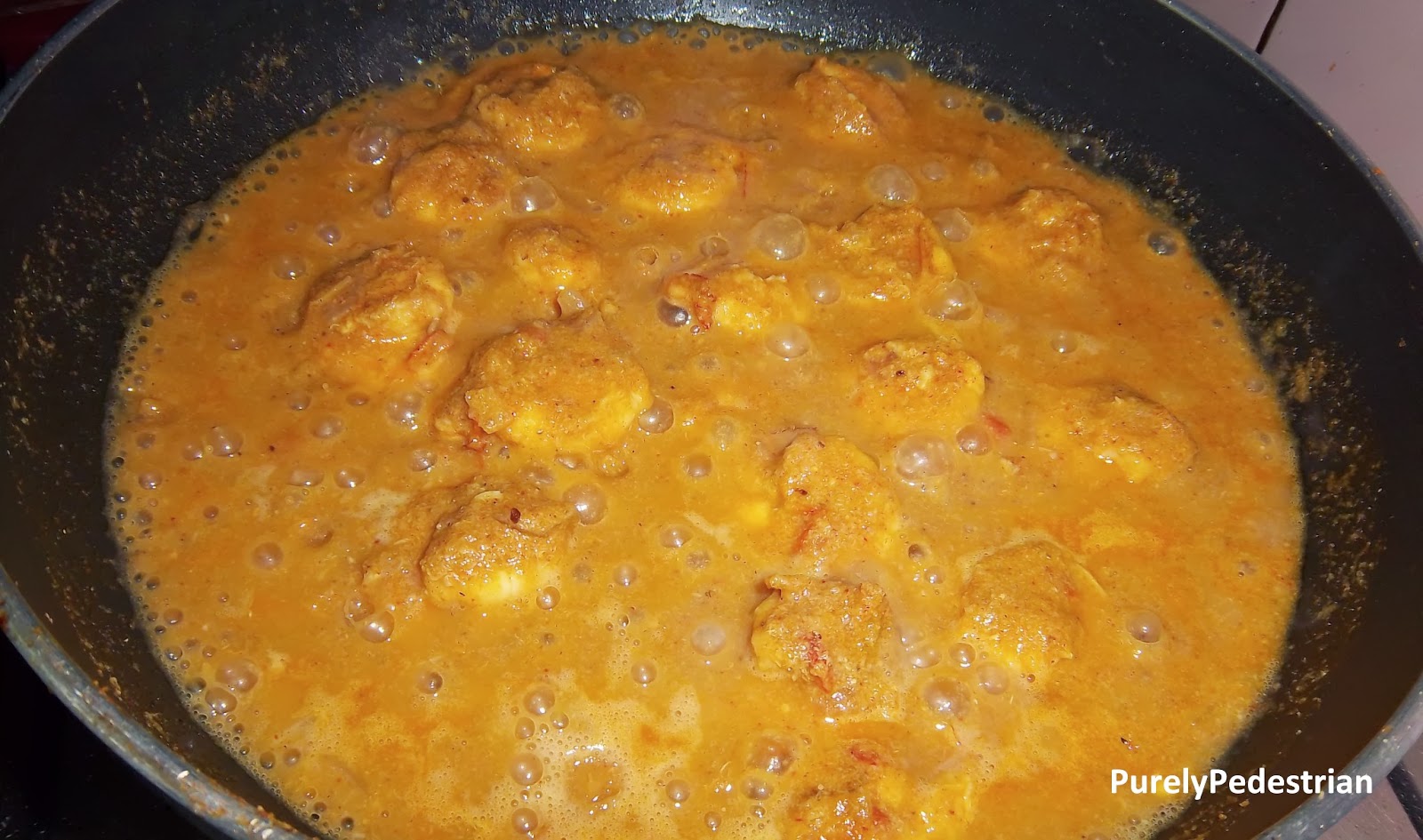
Prawns Masala Curry, Kolambi Masala, Jhinga Masala

I have always loved seafood especially cooked the Goan or Malvani way. After checking a few blogs and trying out a few recipes I still did not get to the taste I wanted. Then recently, I found this recipe here. I did not follow this recipe as is and made a few changes which I was quick to jot down, lest I forget it the next time I want to make it. I added a few ingredients to the marinade and masala powder and left some out later in the recipe. And now, I think I have my perfect Prawn Masala Curry.
 
So this time when I got tiger prawns at the fish vendor I decided I was going to cook my fave recipe - Kolambi / Prawn Masala. The masalas in this curry tend to dominate the curry so use shrimps or medium sized prawns so that its flavor can compete with the spices.
Ingredients
Tiger Prawns / Kolambi / Jhinga - 15-20 peeled, deveined
Onion / Kaanda / Pyaz - 1
Tomato / Tamatar - 1
Red Chilli / Mirchi powder - 1tsp (optional)
Kokum - 1 petal (optional)
Salt to taste
Oil - 2 tbsp
Coriander / Dhaniya leaves - 1 tbsp.
Marinade:
Red chili / Mirchi powder - 1tsp
Pepper / Kali miri powder - 1/4tsp
Ginger / Adrak - 1inch
Garlic / Lehsun - 4 cloves
Tamarind / Imli - 1/2tsp
Salt
Masala powder
Coriander / Dhaniya seeds - 1.5tbsp
Cumin / Jeera - 1tsp
Green Cardamom / Chhoti elaichi - 4
Black Cardamom / Badi elaichi - 2
Cloves / Lavang - 5
Cinnamon / Dalchini - 1inch
Star Anise Chakri - 1.5
Fennel / Saunf - 1/2sp
Grind to paste
Coconut / Nariyal grated - 4 tablespoon
Onion / Pyaaz sliced - 1
Oil / Tel- 1tsp
Wash the prawns, pat dry and keep in a bowl. Grind the ingredients for the marinade - ginger, garlic, tamarind, red chili powder, turmeric powder, pepper powder and salt. Apply the marinade paste to the prawns and keep aside.
Heat a pan and dry roast the whole spices individually. Use only the seeds of the green and black cardamom and discard the peel. Once all spices are roasted, grind them to a powder and keep aside.
Now prepare the paste - Heat 1 teaspoon of oil and sauté the onions till soft and translucent. Then add the grated coconut and fry it till light brown. Take it off the stove and once it is cool grind it to a paste with very little water. 
In the same pan add the prawns with the marinade and sear on both sides. Keep aside.
Then heat the remaining oil and fry the onions till soft and light brown. Add the chopped tomatoes and fry well till the tomatoes are soft and mushy. Add the coconut-onion paste and fry for few minutes till you see oil leaving the sides and it becomes one mass.

Add the masala powder to this and fry for a minute or two. Then add the seared prawns to this and sauté for a minute to mix it all. Add half a cup of water and let it boil. Check if a petal of kokum is needed, most likely it may not be needed since the marinade has tamarind. Also check for salt and heat and add if needed. Check if the prawns are done. Garnish with coriander leaves and it is ready to be served. It goes well with both chapati and rice.
Prawns Masala
 
This recipe goes to "Side dish mela", hosted by cooking4allseasons.